As the demand for streamlined customer experiences grows, self-service ordering kiosks have emerged as a vital solution for businesses navigating the complexities of the fintech landscape. By evaluating Abacus, a fintech company specializing in self-service kiosks, we delve into how this technology not only enhances operational efficiency but also improves customer satisfaction. In an increasingly digital world, understanding the functionality and ROI of such innovations is paramount. Companies face the challenge of integrating streamlined financial services with user-friendly interfaces, all while ensuring compliance and security. This evaluation will guide decision-makers through the key features and benefits of Abacus’s solutions, helping them address pressing concerns and leverage technology for competitive advantage. Prepare to discover how strategic investments in fintech kiosks can transform service delivery and meet evolving customer expectations.
Evaluating Abacus: Overview of Self-Service Kiosk Solutions
In an era where customer service expectations are at an all-time high, self-service kiosks have emerged as a transformative solution for fintech companies. Abacus, a leader in deploying innovative self-service ordering kiosks, offers a comprehensive suite of features designed to enhance engagement, streamline operations, and drive revenue. As consumers increasingly favor the convenience of technology, understanding the strategic advantages of these kiosks becomes essential for firms looking to keep pace in a rapidly evolving market.
Abacus self-service kiosks are meticulously designed for various financial applications, including banking, payments, and compliance. These kiosks not only facilitate transactions but also collect valuable user data that can inform future business strategies. Their modular architecture allows for easy integration of additional services such as digital wallets or loyalty programs, catering to the diverse preferences of digital-savvy consumers. By automating routine transactions, businesses can redeploy personnel to more complex customer interactions, ultimately enhancing overall service quality.
Furthermore, the user experience in Abacus kiosks is pivotal to their effectiveness. With intuitive interfaces, these kiosks minimize friction, guiding users through processes with clear visual cues and responsive designs. This focus on usability is supported by comprehensive analytics capabilities, allowing organizations to gauge user interactions and make data-driven decisions that refine the customer journey. In an era characterized by rapid technological advancements, investing in such self-service solutions can significantly affect customer satisfaction and retention.
In summary, Abacus provides not just a tool, but a strategic asset for fintech companies navigating the complexities of customer engagement in a digital landscape. With the right mix of technology and design, these kiosks empower businesses to enhance operational efficiency, foster customer loyalty, and ultimately drive profitability in a competitive marketplace.
The Business Impact of Self-Service Kiosks in Fintech
The shift towards self-service kiosks in the fintech sector is not merely a trend; it’s a necessary evolution in response to changing consumer expectations and operational demands. Companies like Abacus are at the forefront of this transformation, illustrating how these kiosks can profoundly impact business outcomes by enhancing efficiency and customer satisfaction. According to research, nearly 70% of consumers prefer self-service options for routine transactions, highlighting a significant opportunity for fintech firms to increase engagement and streamline their service models.
Implementing self-service kiosks enables fintech companies to optimize several areas of their business. By automating repetitive tasks-such as account management, deposit processing, and loan applications-organizations can reduce operational costs and redirect human resources towards more complex, value-added functions. This not only improves service delivery but also allows staff to deliver personalized support where it matters most, leading to a stronger customer relationship. For instance, Abacus’s kiosks are designed to provide real-time analytics, enabling businesses to fine-tune their offerings based on user interactions and preferences, aligning their services more closely with market demands.
Key Business Benefits
The impact of self-service kiosks extends beyond immediate operational efficiencies. Here are some key benefits that fintech companies can expect when integrating these solutions:
- Improved Customer Experience: Kiosks offer a faster, more efficient means for users to perform transactions, significantly reducing wait times and enhancing customer satisfaction.
- Cost Reduction: By automating services, companies can minimize labor costs while still maintaining high levels of service efficiency.
- Data Collection and Insights: Kiosks provide crucial data that can inform business strategies, from understanding peak transaction times to tracking user preferences.
- Compliance and Security: With built-in safeguards and regulatory compliance features, kiosks can help mitigate risks associated with transactions and data management.
Adopting self-service kiosks forms a critical part of a business strategy geared towards innovation and customer-centricity. With seamless integration capabilities, such as connecting with digital wallets and compliance tools, Abacus kiosks position fintech companies to not only meet current consumer needs but also anticipate future demands effectively. As the market continues to evolve, investing in these technologies will be essential for staying ahead of the competition, ensuring compliance, and ultimately enhancing profitability.
Key Features of Abacus Self-Service Kiosks
Abacus self-service kiosks are distinguished by their robust feature set, designed to cater to the diverse needs of fintech industries while enhancing customer experiences and operational efficiencies. These kiosks are not just transaction machines; they represent a strategic evolution in how financial services are delivered, leveraging technology to streamline processes and optimize consumer interactions.
A standout feature of Abacus kiosks is their intuitive user interface, which prioritizes customer engagement through easy navigation and clear prompts. This design not only minimizes the learning curve but also accelerates transaction completion, addressing one of the key pain points for users who may be less tech-savvy. In addition, these kiosks are equipped with state-of-the-art security measures, including biometric authentication and end-to-end encryption, which ensure that personal and financial data are protected against breaches and fraud.
Furthermore, Abacus kiosks offer flexibility with multi-channel integration capabilities, enabling seamless connections with various payment solutions such as digital wallets and loyalty programs. This means customers can engage in transactions and apply for services like loans or insurance directly at the kiosk, enhancing user convenience and driving up transaction volumes. The ability to provide real-time data analytics is another critical feature, giving businesses insights into customer behavior and transaction trends that can inform strategic decisions.
Lastly, adaptability to local regulatory requirements cannot be understated. Abacus kiosks are designed to be compliant with financial regulations across different jurisdictions, ensuring that implementations are both secure and lawful. As fintech companies look to innovate while remaining compliant, these features position Abacus kiosks as a compelling choice in a rapidly evolving market landscape. By integrating these advanced functionalities, Abacus not only addresses current operational challenges but also prepares businesses for the future of digital finance.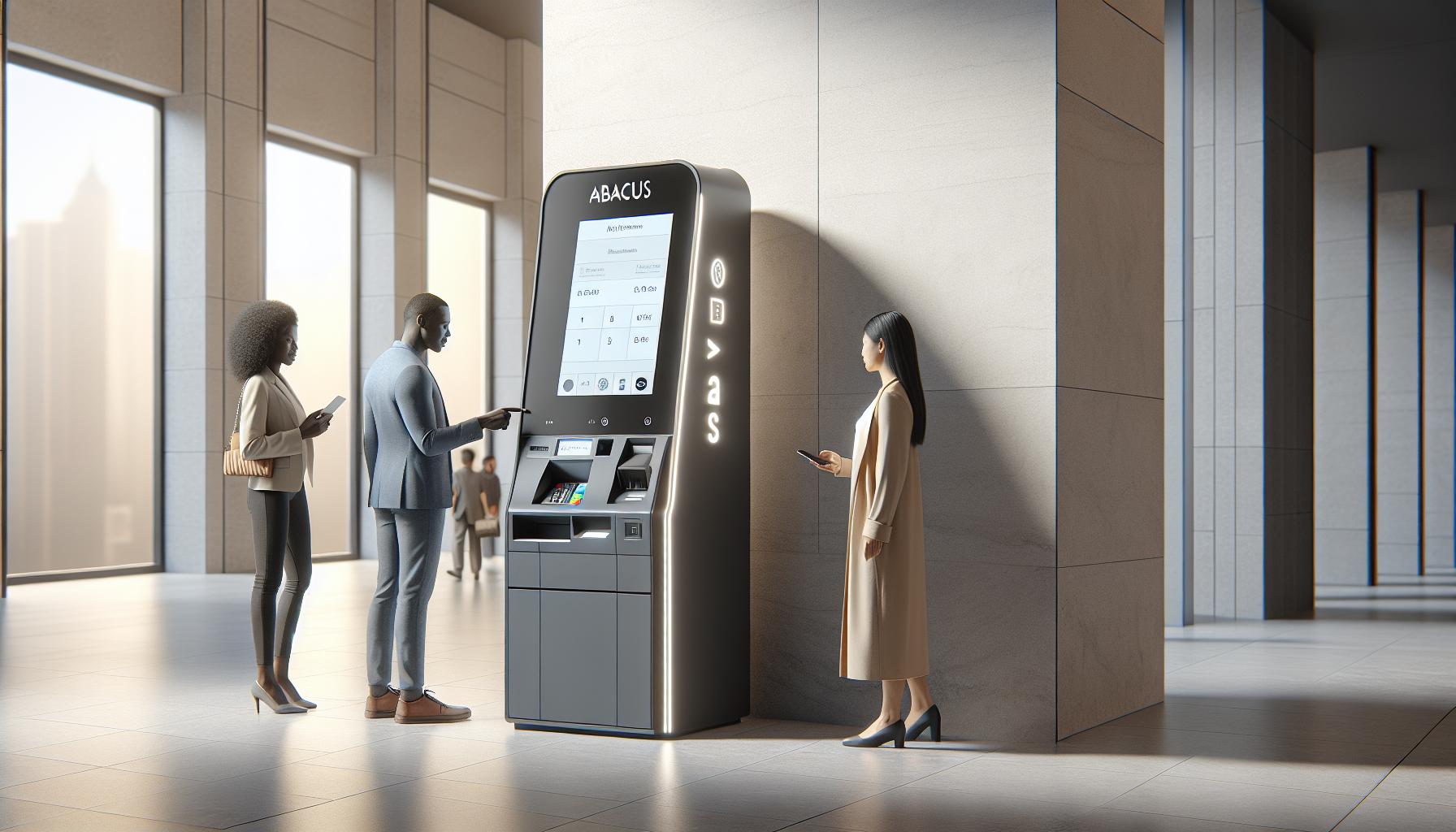
User Experience: Design and Functionality Insights
The user experience of Abacus self-service kiosks is designed with the customer journey in mind, ultimately enhancing engagement and satisfaction. In today’s fast-paced financial environment, where clients seek efficiency and simplicity, the intuitive design of these kiosks stands out. They feature a clean, user-friendly interface that facilitates seamless navigation, minimizing the learning curve for all users-from tech-savvy customers to those less familiar with technology. This approach not only enhances usability but significantly accelerates transaction processes, addressing a common pain point in financial services.
Key functionalities of the Abacus kiosks include advanced multi-channel integration, allowing customers to conduct transactions through various payment systems-including credit cards, digital wallets, and even loyalty programs. This flexibility ensures that users have alternatives suited to their preferences, thus elevating convenience and driving transaction volumes. The kiosks also provide an enriched customer experience by enabling immediate access to services like loan applications or account inquiries, all without requiring the presence of staff. This reduction in reliance on human interaction simplifies processes for customers who appreciate quick service.
Moreover, the kiosks are built with security at the forefront. With features like biometric authentication and encryption, users can engage in transactions with peace of mind, knowing that their personal and financial information is protected. This focus on security not only fosters trust between the customer and the financial institution but also adheres to the stringent regulatory requirements found across different jurisdictions.
In terms of future adaptability, the design of Abacus kiosks is crafted to evolve continually, catering to changing user needs and regulatory landscapes. As fintech continues to transform and innovate, ensuring that self-service kiosks remain compliant with laws and regulations while pushing the envelope on customer engagement is paramount. By balancing cutting-edge technology with user-centric design, Abacus not only optimizes current operational challenges but also prepares businesses to meet the evolving demands of digital finance, creating a more efficient and customer-friendly environment in the process.
Comparative Analysis: Abacus vs. Competitors
In the increasingly competitive landscape of self-service kiosks in the fintech sector, Abacus stands out, yet it faces considerable competition from major players such as NCR, Diebold Nixdorf, and self-service solutions emerging from startups. Understanding the nuances between these providers is crucial for financial institutions looking to adopt effective kiosk solutions.
Abacus differentiates itself primarily through its user-centric design and robust security features. Its kiosks boast an intuitive interface that streamline transactions, making them accessible to a wider range of customers, from tech-savvy individuals to those less familiar with digital transactions. By integrating features such as biometric authentication and multi-channel payment options (credit cards, digital wallets), Abacus not only enhances the customer experience but also addresses security concerns that continue to permeate the fintech space.
In contrast, while NCR and Diebold Nixdorf provide strong operational reliability and extensive support infrastructure, their offerings can sometimes lack the level of customization and user-centric design that Abacus emphasizes. For example, NCR’s products may focus more on transactional efficiency rather than enriching user interaction, potentially alienating less tech-oriented customers. Furthermore, Abacus’s scalability makes it a more agile choice for fintech firms aiming to adapt quickly to changing regulations and consumer demands, while competitors may struggle with legacy systems that impede flexibility.
The pricing strategy is also a vital factor. Abacus generally offers competitive pricing structures that appeal to smaller financial institutions and startups, which might find NCR and Diebold Nixdorf’s pricing models more suitable for larger enterprises with extensive resources. Specific ROI metrics can vary, but the potential for increased customer engagement and reduced wait times in branches offers a clear pathway for institutions assessing their investment in self-service technology. This focus on affordability without sacrificing quality positions Abacus well against larger competitors, especially in budget-conscious environments.
Ultimately, the choice between Abacus and its competitors often comes down to individual institutional needs. Financial entities must weigh factors like user experience, security features, scalability, and cost. By opting for Abacus, institutions are, in essence, choosing a solution that not only delivers on technological capabilities but also aligns with evolving customer expectations and operational demands in the digital era.
Integrating Payment Solutions with Self-Service Kiosks
In the increasingly digital financial landscape, the seamless integration of payment solutions into self-service kiosks is paramount for enhancing customer satisfaction and operational efficiency. Abacus demonstrates a forward-thinking approach in this area, employing cutting-edge technology to ensure that transactions are not only secure but also user-friendly. The incorporation of diverse payment methods, including credit cards, debit cards, digital wallets, and even cryptocurrencies, positions Abacus as a versatile player in the fintech market. Offering multiple payment options significantly reduces friction at the point of sale, thereby increasing transaction speed and enhancing the overall customer experience.
Enhancing Security and Compliance
Abacus Kiosks prioritize security in their payment integration strategy. By implementing biometric authentication methods, such as fingerprint scanning or facial recognition, they safeguard sensitive customer financial information. This is crucial not only for building consumer trust but also for adhering to stringent regulatory requirements across various jurisdictions. The kiosks are designed to comply with Payment Card Industry Data Security Standard (PCI DSS) protocols, ensuring that customer payment data is processed and stored securely. Moreover, periodic updates and audits further bolster compliance, protecting institutions against potential breaches or fraud.
Real-World Implementation and Benefits
Consider a case study where a regional bank implemented Abacus self-service kiosks equipped with an integrated payment platform. Within just a few months, the bank saw a 30% increase in transaction volumes at branches where kiosks were deployed. Customers appreciated the ability to quickly perform transactions without the need to wait in line, favoring the kiosks for their speed and convenience. This not only elevated customer satisfaction but also enabled bank staff to focus on providing personalized services rather than handling routine transactions.
Integrating payment solutions into self-service kiosks also opens the door to powerful data analytics capabilities. Abacus kiosks can track transaction patterns and customer preferences, providing valuable insights that financial institutions can leverage for targeted marketing and service improvement. By harnessing such data, institutions can refine their offerings and foster stronger customer relationships, ultimately contributing to revenue growth and loyalty.
Scalability and Future-Proofing
Abacus’s architecture is designed to easily adapt to evolving payment technologies and regulatory changes, ensuring scalability for institutions. As new payment methods emerge, such as contactless payments and blockchain-based solutions, Abacus kiosks can integrate these innovations without extensive overhauls. This flexibility is critical for financial institutions aiming to stay competitive in a fast-paced market. By selecting Abacus for their self-service solutions, organizations position themselves to meet future customer demands while maintaining a firm grip on their operational costs.
In conclusion, the integration of payment solutions in Abacus self-service kiosks not only supports enhanced customer experiences but also underpins security, compliance, and operational efficiency. As financial transactions continue to evolve, choosing a kiosk provider that embraces innovation while ensuring robust security can significantly impact an institution’s success in the digital era.
Case Studies: Success Stories Using Abacus Kiosks
In the evolving landscape of fintech, Abacus self-service kiosks have been pivotal in reshaping customer engagement and operational efficiencies for financial institutions. One compelling example comes from a well-known regional bank that integrated Abacus kiosks into its service model. Initially overwhelmed by long customer lines, the bank sought a solution to enhance the speed of transactions while freeing up staff to focus on more complex customer queries. Within a few months of deploying Abacus kiosks, the bank reported a striking 30% increase in transaction volumes at its branches equipped with the kiosks. Customers embraced the kiosks for their ability to facilitate quick, hassle-free transactions, significantly enhancing customer satisfaction and loyalty.
These success stories are not isolated. A nationwide credit union leveraged Abacus kiosks to streamline loan application processes. By utilizing the kiosks for initial data entry, applicants could input their information quickly, which not only reduced the waiting time but also minimized errors that often occurred during manual entry by staff. This improvement led to a 25% reduction in the loan processing time, while increased accuracy resulted in better compliance with regulatory requirements. The credit union also found that the availability of kiosks during non-traditional banking hours increased access for members, thus fostering an inclusive banking environment.
Another case involves a technology-driven bank that utilized Abacus kiosks to enhance its customer service experience further. By integrating advanced analytics capabilities within the kiosks, the bank was able to track user behavior and transaction patterns. This data allowed them to refine their marketing strategies, resulting in targeted promotions that better met customer needs. The bank saw a 40% uplift in the uptake of specific financial products among kiosk users, demonstrating the tangible business impact of utilizing data-driven insights to meet customer demands.
These real-world implementations highlight the strategic advantages of incorporating Abacus self-service kiosks into the financial services sector. By not only improving transaction efficiency but also leveraging data analytics for personalized service, organizations can drive substantial ROI while adhering to essential compliance and security standards. As evidenced by these success stories, the use of such technology is not just a trend; it is becoming an essential component of a modern, responsive banking strategy.
Regulatory Compliance Considerations for Kiosk Solutions
In the fast-evolving world of fintech, regulatory compliance stands as a cornerstone for the successful implementation of self-service kiosks, particularly those offered by Abacus. As financial institutions leverage these kiosks to streamline transactions and enhance customer engagement, it is critical to navigate the complex landscape of regulations governing customer data protection, transaction security, and accessibility.
To ensure compliance, institutions must address the following key areas:
- Data Protection and Privacy: Adhering to regulations such as the General Data Protection Regulation (GDPR) and the California Consumer Privacy Act (CCPA) is paramount. Kiosks must implement robust encryption methods for data transmission and storage, ensuring that sensitive information remains secure from breaches.
- Transaction Security: Compliance with Payment Card Industry Data Security Standards (PCI DSS) is essential for kiosks that handle payment transactions. This includes regular security assessments, implementing secure transmission protocols, and maintaining a secure network configuration to prevent fraud and unauthorized access.
- Accessibility Standards: Kiosks must comply with the Americans with Disabilities Act (ADA) to ensure they can be used by all customers, including those with disabilities. Incorporating features like audio descriptions, tactile interfaces, and adjustable heights can enhance usability and broaden access.
- Consumer Protection Laws: Understanding and adhering to local and federal consumer protection laws is crucial. This may involve clear communication regarding fees, terms, and conditions associated with kiosk transactions to avoid potential legal ramifications.
The experience of a regional bank that integrated Abacus kiosks exemplifies the importance of compliance. As they implemented these kiosks, they conducted thorough compliance training for staff and routinely audited kiosk functions to ensure adherence to legal standards. This proactive approach not only protected the institution from potential regulatory fines but also fostered a sense of trust among customers, strengthening their brand reputation.
Furthermore, institutions should embrace technology partnerships that prioritize compliance. Abacus, with its focus on creating secure and user-friendly self-service solutions, can assist financial institutions in navigating these regulatory concerns. Regular updates and support from such vendors can help ensure that kiosks remain compliant with evolving regulations, providing operational peace of mind to financial leaders.
In summary, while self-service kiosks present significant opportunities for innovation and efficiency, thorough compliance planning is crucial to mitigate risks associated with data security and regulatory challenges. By investing in compliance strategies and leveraging partnerships with vendors like Abacus, financial institutions can enhance customer experience and drive substantial business impact without compromising on regulatory responsibilities.
Scalability and Flexibility of Abacus Self-Service Kiosks
The growing demand for self-service solutions in the fintech sector necessitates systems that can scale and adapt to ever-evolving customer needs. Abacus self-service kiosks are designed with both scalability and flexibility in mind, catering to the diverse requirements of financial institutions that seek to enhance customer experience while optimizing operational efficiency.
One of the impressive attributes of Abacus kiosks is their modular design. This allows institutions to easily add or remove features as business needs change. For instance, a bank that initially deploys kiosks for basic transaction management can later integrate comprehensive account management features or biometric identification, enhancing security and user engagement without the need for a complete system overhaul. This adaptability not only helps in rolling out new services quickly but also minimizes future capital expenditures related to kiosk upgrades and replacements.
- Cloud Integration: Leveraging cloud technology, Abacus kiosks facilitate real-time updates and data processing. This enables financial institutions to efficiently manage multiple locations without requiring on-site IT oversight. As a result, organizations can scale their kiosk operations by launching new locations or services while maintaining centralized control.
- Configurable User Interfaces: Institutions can customize the user interfaces of the kiosks to reflect their branding or specific service offerings. This flexibility ensures that institutions can cater to diverse customer segments, from tech-savvy millennials to older generations who might prefer simpler interfaces.
- Multi-Functionality: By incorporating a range of functionalities-such as cash deposit, withdrawal, account inquiry, and even regulatory compliance checks-Abacus kiosks can serve various purposes within a single unit. This not only saves space but also allows for seamless customer experiences as users can accomplish multiple tasks in one visit.
The implementation of Abacus kiosks has been met with positive outcomes in various case studies. For instance, a regional credit union successfully scaled its self-service offerings by adopting Abacus kiosks, resulting in a 30% reduction in queue times during peak hours and a significant increase in customer satisfaction ratings. Such successes underscore the importance of scalability and flexibility, demonstrating that selecting the right kiosk solutions can have profound implications on operational efficiency and customer engagement strategies.
In conclusion, the ability to scale and adapt to changing market dynamics is crucial for fintech institutions. Abacus self-service kiosks offer the necessary tools for financial organizations to not only meet their current demands but also future-proof their operations in an increasingly competitive landscape. By investing in such versatile solutions, institutions can enhance their service offerings while fostering greater trust and loyalty among their users.
Cost-Benefit Analysis: ROI of Implementing Kiosks
Implementing self-service kiosks has become a strategic move for financial institutions looking to enhance customer engagement while optimizing operational costs. From a cost-benefit perspective, the return on investment (ROI) for Abacus kiosks is primarily driven by reduced labor costs, improved operational efficiency, and enhanced customer satisfaction. By offering 24/7 access to services, these kiosks help institutions cater to customer needs outside traditional business hours, thus attracting a larger clientele.
One of the most significant financial benefits of deploying Abacus kiosks is the reduction in personnel costs. According to industry studies, institutions that install self-service kiosks can reduce transaction handling costs by up to 60%. This shift not only allows staff to focus on more complex customer interactions but also streamlines service delivery, leading to a faster transaction turnaround. Additionally, the kiosks’ multi-functionality-enabling tasks like cash deposits, withdrawals, and account inquiries in one unit-creates operational efficiencies that further enhance cost savings.
Operational Efficiency Gains
Abacus kiosks stand out with their modular design, allowing institutions to adapt quickly to changing customer needs without the need for significant reinvestment. For example, banks that start with basic functionality can easily add features such as biometrics or advanced account management down the line. This adaptability translates into sustained financial benefits as institutions can introduce new services to meet market demands, without incurring the substantial costs of replacing or overhauling existing systems.
- Case Study: A regional bank that adopted Abacus kiosks reported a 30% increase in transaction throughput during peak hours and a measurable uptick in customer satisfaction ratings, which often translates into higher retention rates and increased customer lifetime value.
- Customer Engagement: Facilities offering easy and quick access to services via kiosks have seen a marked increase in customer engagement, which drives further revenues through the upselling of additional products and services.
In terms of regulatory compliance, the ability of Abacus kiosks to integrate with current systems and secure transactions can mitigate risks associated with emerging compliance regulations, which is increasingly crucial in the rapidly evolving fintech landscape. Overall, the investment in Abacus kiosks provides a robust ROI by not only reducing costs but also enhancing service delivery and compliance adherence, positioning financial institutions for sustained competitive advantage.
Future Trends in Self-Service Technology for Fintech
As financial institutions increasingly recognize the transformative potential of self-service technology, a significant shift towards automation and customer-centric solutions is unfolding. Innovations in self-service kiosks, notably by companies like Abacus, are set to propel fintech into exciting territories. By harnessing advanced technologies such as artificial intelligence (AI), biometric authentication, and machine learning, the future landscape for these kiosks will not only enhance efficiency but also redefine customer interactions. These advancements facilitate seamless and personalized banking experiences, meeting the demands of today’s tech-savvy consumers.
The integration of AI into kiosks is a game changer for customer service. Future iterations of Abacus kiosks could leverage AI to offer tailored services based on individual customer profiles. For instance, utilizing historical transaction data and behavior analytics, kiosks may proactively suggest relevant financial products at the point of interaction, enhancing cross-selling opportunities. Moreover, as AI-driven chatbots become more advanced, they could provide immediate assistance to customers utilizing kiosks, further reducing wait times and improving customer satisfaction.
Another trend to watch is the growing importance of security in self-service technology. As regulatory scrutiny intensifies around data protection, Abacus kiosks will likely incorporate sophisticated security measures, such as advanced biometrics (facial recognition, fingerprints) and secure transaction protocols to mitigate fraud risks. This not only ensures compliance with regulations but also builds customer trust in using these systems for sensitive transactions.
In terms of scalability, Abacus kiosks can evolve into multifunctional platforms that integrate with other digital services. As consumer preferences shift towards holistic service offerings, these kiosks can adapt by supporting various financial transactions-from payments to lending applications-within a single interface. By fostering interoperability among different fintech services, companies can provide customers with more cohesive banking experiences. Ultimately, the future of self-service technology in fintech will hinge on adaptability, security, and advanced customer engagement strategies, positioning firms that embrace these advancements-such as Abacus-at the forefront of industry evolution.
Customer Feedback and Insights on Abacus Solutions
As customer expectations rapidly evolve, fintech solutions like Abacus are increasingly being evaluated based on user feedback. Understanding client perspectives provides vital insights into how well these self-service kiosks are meeting the demands of the marketplace. Abacus users frequently highlight the intuitive functionality and streamlined interface of their kiosks, allowing for quick transactions without the need for extensive staff interaction. Many customers appreciate the ability to manage multiple banking tasks-such as deposits, payments, and loan applications-through a single kiosk, which enhances convenience and reduces transaction times.
Moreover, users note that the integration of advanced features such as biometric authentication significantly boosts their comfort and security. This feedback aligns with industry trends indicating that customers are more likely to trust self-service technology that employs stringent security measures. However, constructive criticism often surfaces regarding the initial learning curve associated with more complex features. Abacus could consider enhancing user onboarding experiences, potentially through interactive tutorials or video guides, to ensure users are fully aware of the kiosks’ capabilities.
Impact on Operational Efficiency
From an operational perspective, businesses that have implemented Abacus kiosks report notable improvements in efficiency. The automation of routine transactions frees up staff to focus on more complex customer interactions, thereby enhancing overall service quality. However, businesses must remain vigilant about addressing the occasional system downtime that some users have reported. Ensuring robust technical support and regular maintenance can mitigate these concerns and maintain user confidence.
In conclusion, customer feedback on Abacus solutions underscores their significant benefits in streamlining services and enhancing security. While users are generally satisfied, continuous improvements in user experience and support will be crucial as these kiosks evolve. By actively integrating customer insights into their development strategy, Abacus can further solidify its position as a leader in the fintech self-service kiosk space, ultimately ensuring higher adoption rates and improved customer satisfaction.
Frequently asked questions
“`markdown
Q: What advantages do Abacus self-service kiosks provide for financial institutions?
A: *Abacus self-service kiosks enhance accessibility* by allowing customers to perform transactions on their own terms. These kiosks reduce operational costs and improve efficiency, enabling quicker service compared to traditional methods. Additionally, their user-friendly design encourages increased customer engagement and satisfaction.
Q: How does Abacus ensure compliance with financial regulations through its kiosks?
A: *Abacus prioritizes regulatory compliance* by integrating standards for security and privacy in its kiosk solutions. This includes implementing necessary measures for data encryption, user authentication, and transaction monitoring, ensuring that all operations meet both local and international financial regulations.
Q: What types of transactions can clients perform on Abacus self-service kiosks?
A: *Clients can perform various transactions* at Abacus kiosks, including account opening, fund transfers, bill payments, and balance inquiries. This versatility enhances user experience by offering a comprehensive array of banking services in a self-service format, catering to diverse customer needs.
Q: How does the user interface of Abacus self-service kiosks enhance customer experience?
A: *The user interface of Abacus kiosks is designed to be intuitive and accessible,* featuring straightforward navigation and visual prompts. This design minimizes user frustration, facilitating a smooth transaction process and encouraging even less tech-savvy customers to use the kiosks confidently.
Q: What are key differentiators of Abacus compared to other fintech kiosk providers?
A: *Abacus stands out due to its advanced customization options* and integration capabilities with existing banking systems. Unlike many competitors, Abacus offers tailored solutions that align closely with client branding and operational needs, providing a more personalized service.
Q: How can businesses measure the ROI of implementing Abacus self-service kiosks?
A: *Businesses can measure ROI through various metrics,* such as increased transaction volumes, reduced service times, and lower operational costs. Analyzing customer satisfaction surveys and tracking engagement levels post-implementation can also provide insights into the kiosks’ overall effectiveness.
Q: What support and training does Abacus offer for deploying their self-service kiosks?
A: *Abacus provides comprehensive support and training* that includes installation assistance, user training sessions, and ongoing technical support. This ensures that client teams can confidently manage the kiosks, maximizing operation efficiency from day one.
Q: What future trends are impacting self-service kiosks in fintech?
A: *Future trends include enhanced AI integration* for personalized customer interactions, biometric authentication for security, and the expansion of service offerings to include financial advice. Abacus is positioned to leverage these trends, continually adapting its kiosks for evolving demands.
“`
Final Thoughts
In evaluating Abacus’s Self Service/Ordering Kiosk, it’s clear that harnessing automation in your financial processes drives efficiency and enhances customer experience. As businesses increasingly seek innovative solutions, understanding how Abacus’s platform integrates seamlessly into your ecosystem is crucial. Don’t miss the opportunity to leverage these advancements for competitive advantage; explore our case studies on successful fintech implementations and consider consulting with our experts for tailored insights.
If you’re intrigued by self-service solutions, you might also find value in our articles on the latest trends in digital banking and the impact of fintech on consumer behavior. Ready to take the next step? Subscribe to our newsletter for the latest updates in fintech innovation or request a demo to see Abacus in action. Your journey towards optimizing financial services starts now-engage with us and elevate your business strategies!
Get our latest guides, news, and insights highlighted in your Google Search & AI Overviews.